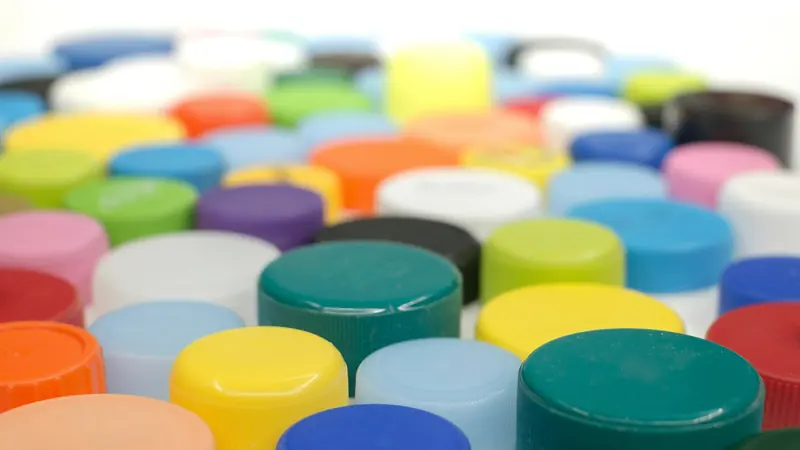
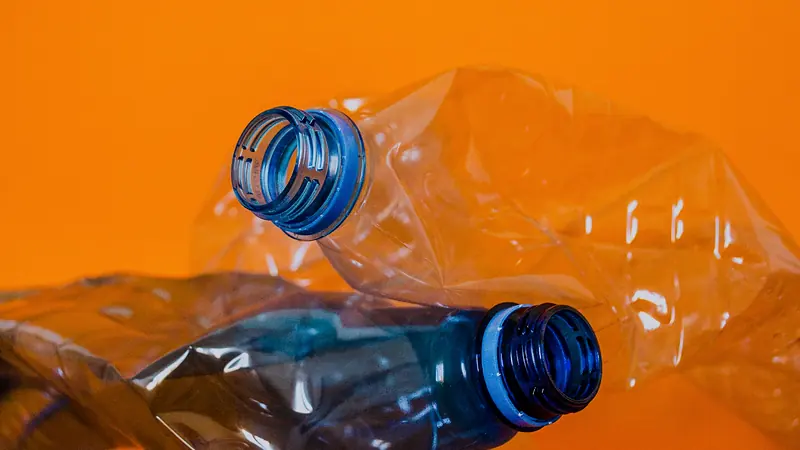
Shoppers notice bottle colour before they read the label. For water in Kazakhstan the choice is usually between two options: a clear bottle and a blue one. Technically both hold water equally well; the differences are in perception, in how the line runs and in what happens to the bottle after use.
Blue and clear: the essentials
Blue bottle
- The familiar colour of drinking water
- The bottle looks cooler and cleaner
- Stands out on a shelf of clear bottles
- The preform contains a colourant
Clear bottle
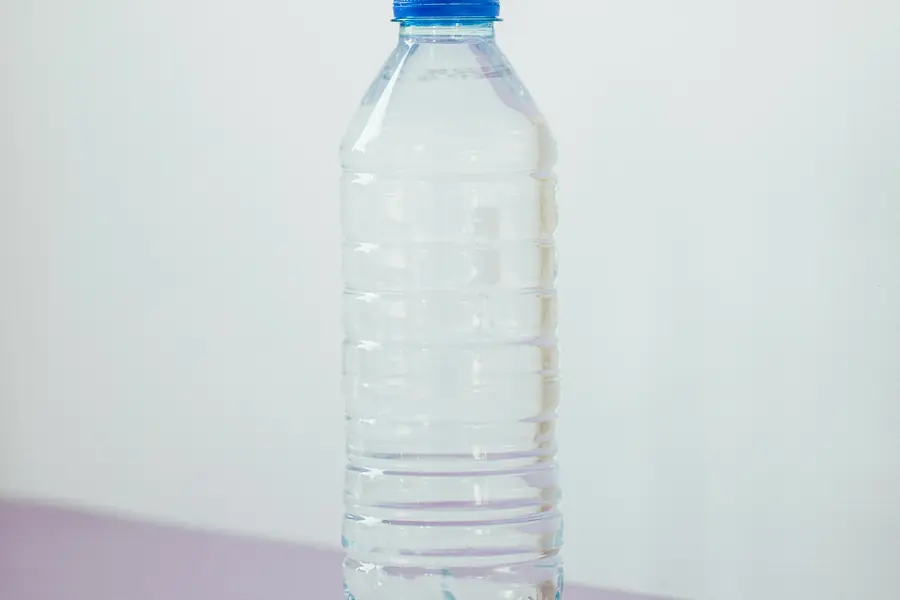
- Shows the clarity of the water itself
- Works for water, oil and juice on the same line
- Pure PET with no colourant
- More valuable for recycling
Both colours are in our range for every bottle size. It is a question of brand and production needs, not quality: both are made from virgin PET.
How colour works on the shelf
Shoppers have long linked a blue tint with drinking water: the bottle looks colder and fresher. In the south of Kazakhstan, where summers are hot and water sales climb roughly from May to September, that is a clear argument at the shelf and in the shop fridge. A clear bottle works differently: it adds nothing to the product and shows the water is clean, with no sediment or tint.
Look not at the colour alone but at the neighbours on the shelf. If most bottles around are blue, a clear one with a bright label may stand out more, and vice versa. Before deciding, walk through shops in your city, whether Shymkent, Turkestan or Taraz, and see how competitors are displayed.
Light, taste and storage
A blue tint blocks only a small share of light and is no substitute for proper storage. For water this matters less than for oil or beer; what matters is keeping bottles out of direct sun and away from odours. Water reveals off-tastes faster than other drinks, so both blue and clear bottles need bottle-grade virgin PET and a dry store out of the sun.
Other products follow different rules. Cooking oil goes into clear bottles because blue distorts its colour. Beer and kvass are usually bottled in brown; ask about brown preforms when you order. Our preforms are designed for cold fill.
Recycling: why clear PET is worth more
Both bottles carry recycling code 1 and can be recycled, but at the recycler they go into different streams. Clear recycled PET can become a new bottle or pack in almost any colour, while coloured material is sorted separately and has fewer uses. That is why clear packaging usually fetches more on the recycling market.
If sustainability and recycling matter to your brand, a clear bottle makes the stronger case. If recognition and the classic look of water matter more, blue remains a safe choice.
Colour and quality control
A clear bottle shows everything: bubbles, black specks, whitening at the shoulder and streaks. It is strict but honest, as any blowing or batch defect is visible straight away on the line. A blue bottle has its own challenge: the shade must match from batch to batch, or bottles of different tints will end up side by side on the shelf, and shoppers will notice.
So when receiving a batch, check different things depending on colour:
- clear preforms: no grey or yellowish tint, even clarity across the batch;
- blue preforms: the same shade in every box, compared against a reference bottle;
- both colours: no bubbles, black specks or streaks, a clean gate with no strings;
- both colours: the weight of 10 preforms on accurate scales matches the nominal.
Which items come in which colour
| Bottle | Recommended for water | Also suitable | Colours |
|---|---|---|---|
| 0.5 L | 21.7 g PCO 1881 | 19.2 g, 24 g PCO 1881 | clear, blue |
| 1 L | 31.7 g PCO 1881 | 26 g, 32 g PCO 1881 | clear, blue |
| 1.5 L | 39.4 g PCO 1810 | 40 g PCO 1881 | clear, blue |
| 5 L | 64 g, 38 mm neck | none | blue as standard, ask about clear |
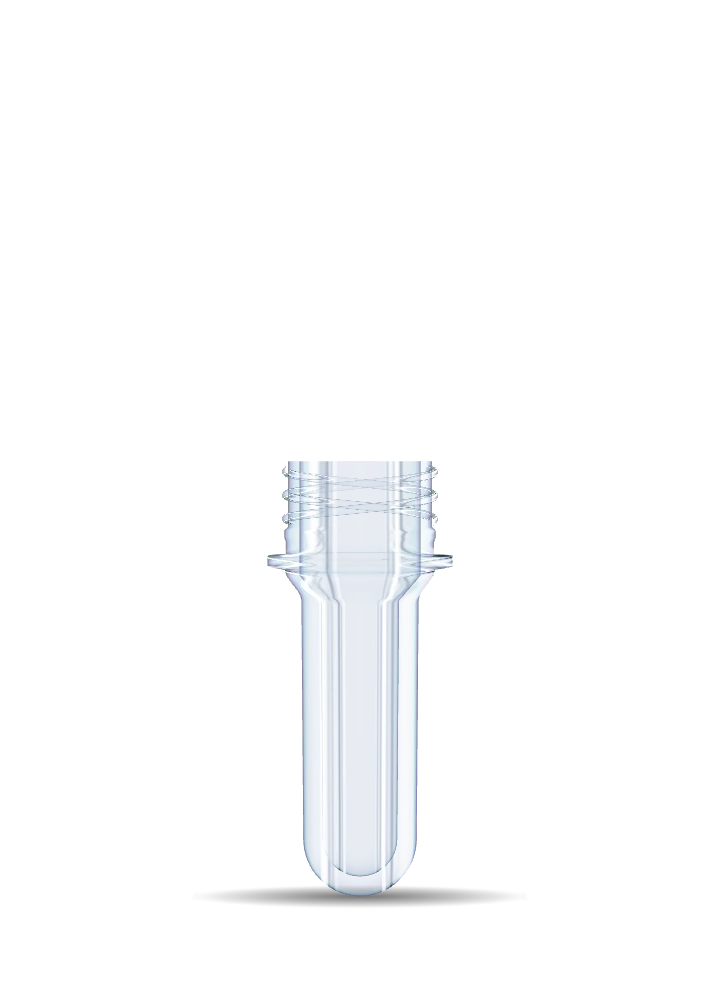
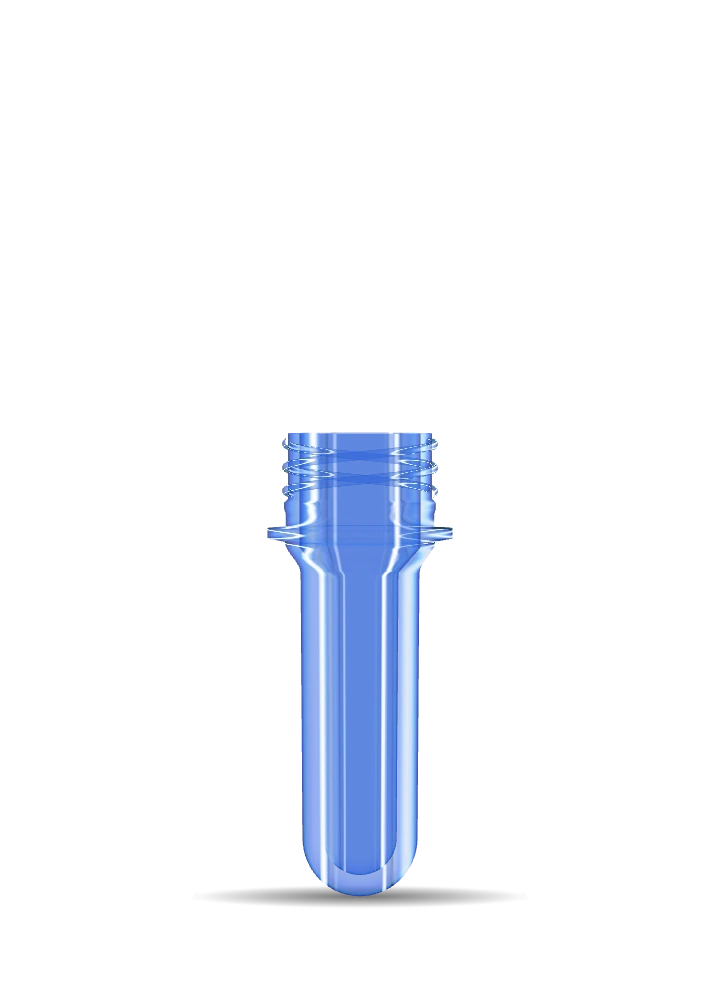
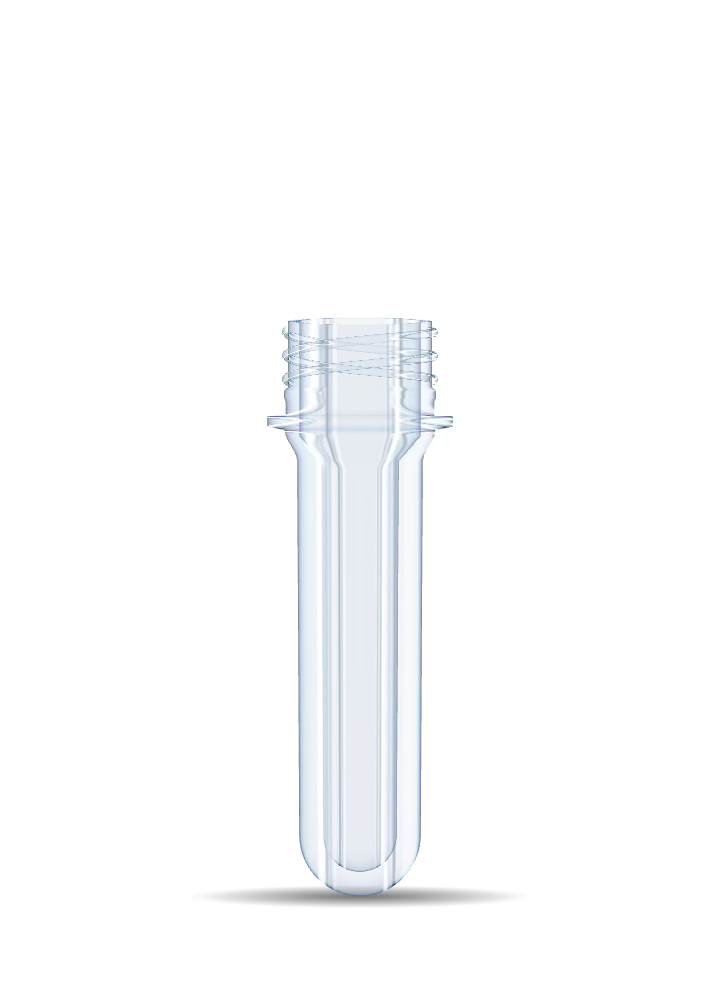
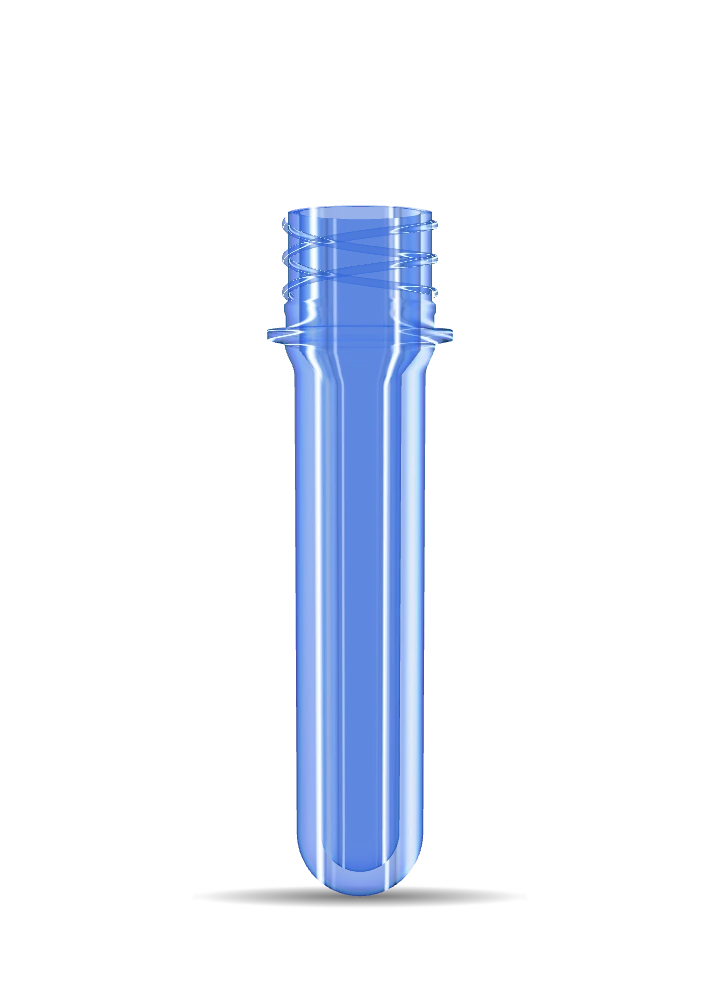
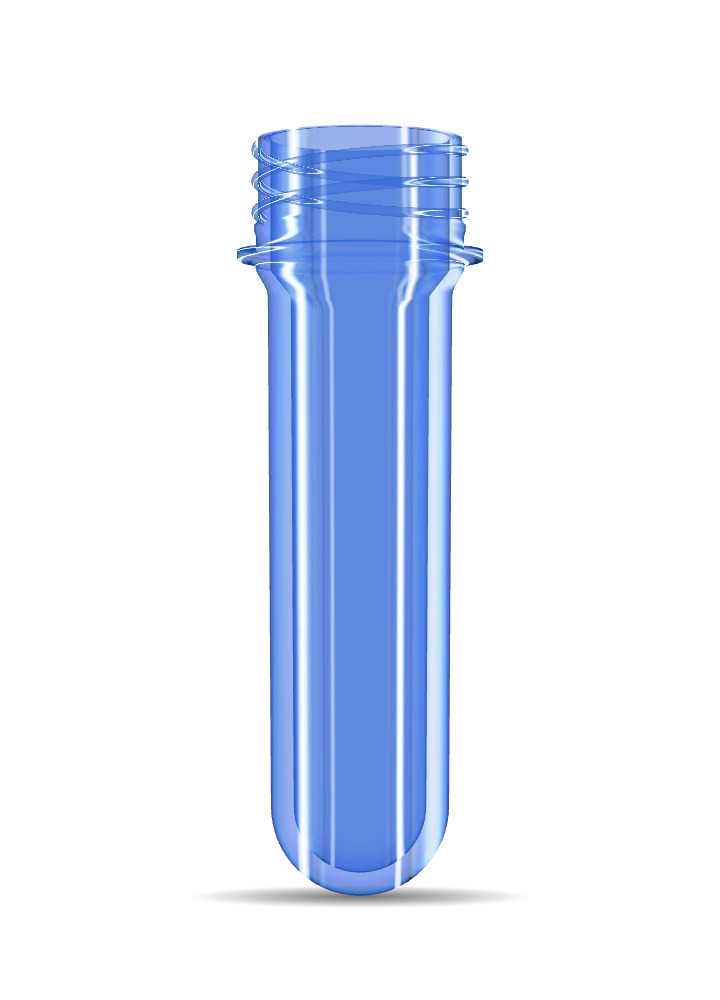
If one line fills water as well as oil or juice, clear simplifies purchasing: fewer items in stock and no preform change between products. For 5 L bottles the standard colour of the 64 g preform is blue.
How to switch colour without line trouble
October is a good time to decide on colour for next season: the sales peak is over, and there is time for a trial batch and a new label.
- 01Define the brand goal
Recognition and a cool look, or product clarity and a recycling story.
- 02Try the label
Check the mock-up on bottles of both colours under shop lighting.
- 03Order a trial batch
Same weight and neck, different colour. Blow a small quantity before a large order.
- 04Check heating
A colourant can slightly change how the preform absorbs lamp heat. A small correction is usually enough.
- 05Check colour consistency
Keep a reference bottle and compare each delivery against it: colour should be even across the batch.
If you decide to sell water in two colours, say blue 0.5 L and clear 1.5 L, plan purchases separately for each item and colour. The calculator shows preforms, PET and boxes for each, so by spring you have stock of both colours without surplus.
Bottle colour serves the brand; water and bottle quality come from virgin PET, good blowing settings and proper storage.
Questions and answers
Is a blue preform more expensive than clear?
Colour affects price less than weight, but it is included: a blue preform contains a colourant. We quote the exact price for your batch.
Do we need to re-tune blowing when changing colour?
Usually a small heating correction is enough. Check the first bottles for whitening, wall thickness and gate centring.
Does a blue bottle protect water from sunlight?
Only partly. Store finished product out of direct sun whatever the bottle colour.
Do you have other colours?
Our main colours are clear and blue. Ask about other shades, such as brown, when you order.