

The neck is the only part of a preform that does not change during blowing. It is moulded in its final form: the thread, the bead for the cap's tamper ring and the support ring the blow moulder holds it by. That is why the neck standard comes first, before weight: it decides the caps, the capping heads and part of the blow moulder tooling. For 0.5-1.5 L bottles in Kazakhstan you will usually meet two 28 mm standards: PCO 1881 and PCO 1810.
How the two 28 mm necks differ
PCO stands for plastic closure only, a neck made for a plastic cap. PCO 1810 is the older standard with a tall neck of about 21 mm. PCO 1881 came later: the neck is shorter, about 17 mm, the threaded part is thinner, and its cap is lower and lighter. Both have a 28 mm thread, so they are easy to confuse at a glance.
| Parameter | PCO 1881 | PCO 1810 |
|---|---|---|
| Neck height to support ring | ≈17 mm | ≈21 mm |
| Thread diameter | 28 mm | 28 mm |
| Neck mass | ≈1.3 g lighter | heavier |
| Cap | 28 mm PCO 1881 cap, lower and lighter | 28 mm PCO 1810 cap |
| Where you find it | water and soft drinks, newer lines | lines set up for 1810 caps, often soft drinks |
| Bottles in our range | 0.5, 1 and 1.5 L | 1.5 L |
| QazaqEt items | 8 items, 19.2-40 g | 39.4 g, best seller |
Why 1.3 g on the neck matters more than it seems
During blowing the preform body stretches into a bottle while the neck stays as it is. The PET in the neck adds nothing to wall stiffness; it is there only for the thread and the cap. So every gram saved on the neck either comes off your resin use or moves into the body, where it makes the bottle stronger.
PET saved, kg = bottles × 1.3 g ÷ 1000100,000 bottles a month × 1.3 g ÷ 1000 = 130 kg of PET a month, about 1.56 t a year.
Our range has a good example of moving weight into the body. For a 1.5 L bottle we offer two items: 39.4 g with a PCO 1810 neck and 40 g with a PCO 1881 neck. Total weight is almost the same, but the 40 g preform's neck is about 1.3 g lighter, so roughly 1.9 g more material sits in the body (40 - 39.4 + 1.3). The bottle wall comes out thicker, which is why 40 g PCO 1881 is our first choice for 1.5 L carbonated drinks.
Caps and capping: the real constraint
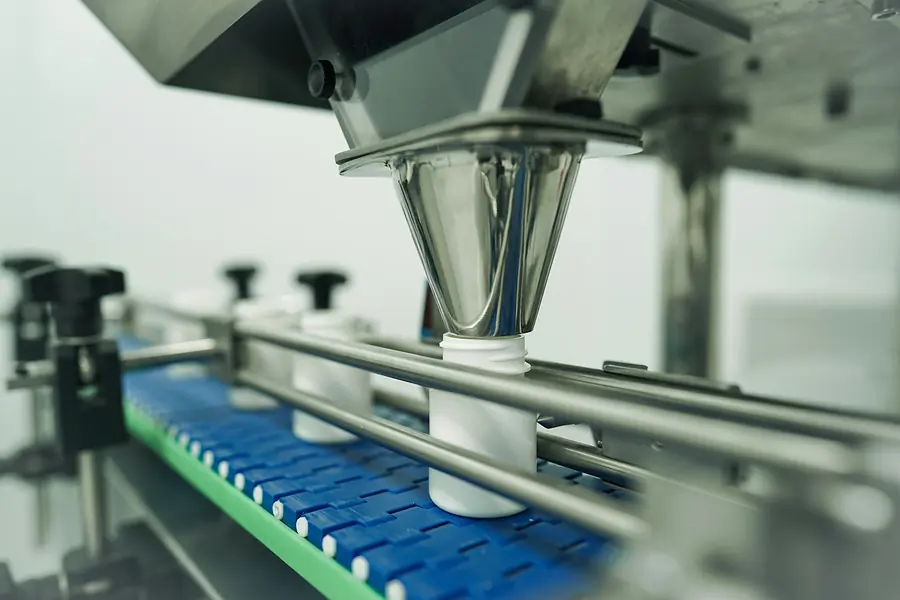
PCO 1881 and PCO 1810 caps are not interchangeable. Their threads and tamper ring positions differ: a cap of the other standard will not seal, and the bottle will leak or open without breaking the ring. The capping head is also set to the height and torque of its own cap, so changing the standard always means new caps and re-tuning the capper.
There is a second point people forget: the blow moulder holds the preform by its support ring. A neck height difference of about 4 mm means a change of standard may require adjusting the holders, the neck shields in the oven and the preform transfer. Ask your equipment supplier what your machine needs before you order the first batch.
How to identify the neck on your line
- 01Take a bottle or preform
Use a finished bottle or preform from your line, not a cap: a cap alone is harder to read.
- 02Measure the neck height
With a caliper, from the top of the neck to the upper face of the support ring. About 17 mm means PCO 1881, about 21 mm means PCO 1810.
- 03Check the thread diameter
The outer size across the thread crests is about 28 mm on both. About 38 mm means a 5 L bottle neck.
- 04Check the caps in stock
Caps must match the neck standard. It is usually stated in the cap supplier's documents.
- 05Send a photo if unsure
Photograph the neck next to a ruler and send it to us; we will identify the standard.
When switching to PCO 1881 makes sense
Stay on PCO 1810
- PCO 1810 caps are already bought for the season
- Capper and blow moulder are tuned and running steadily
- Output is small, so the PET saving will not cover the changeover
- Customers know your bottle and cap
Switch to PCO 1881
- You are starting a new line or buying new moulds
- Output is high, and 13 kg of PET per 10,000 bottles shows in the budget
- You are replacing capping heads or the cap supplier anyway
- You want to move weight into the body for a carbonated product
Winter and early spring are a good time to switch, before the bottling peak in the south from roughly May to September. Run a trial blow and capping test on a small batch before changing over.
If you switch in winter, remember to warm up the cold batch before the trial blow. Otherwise defects caused by cold are easily blamed on the new neck.
Which QazaqEt items use which neck
- PCO 1881, 8 items: 19.2, 21.7 and 24 g for 0.5 L; 26, 31.7, 32 and 35.3 g for 1 L; 40 g for 1.5 L. More on the PCO 1881 neck page.
- PCO 1810, one item: 39.4 g for 1.5 L, our best seller. Other weights with this neck can be sourced to order; see the PCO 1810 neck page.
- 38 mm is a separate standard for 5 L bottles: the 64 g preform; see the 38 mm neck page.
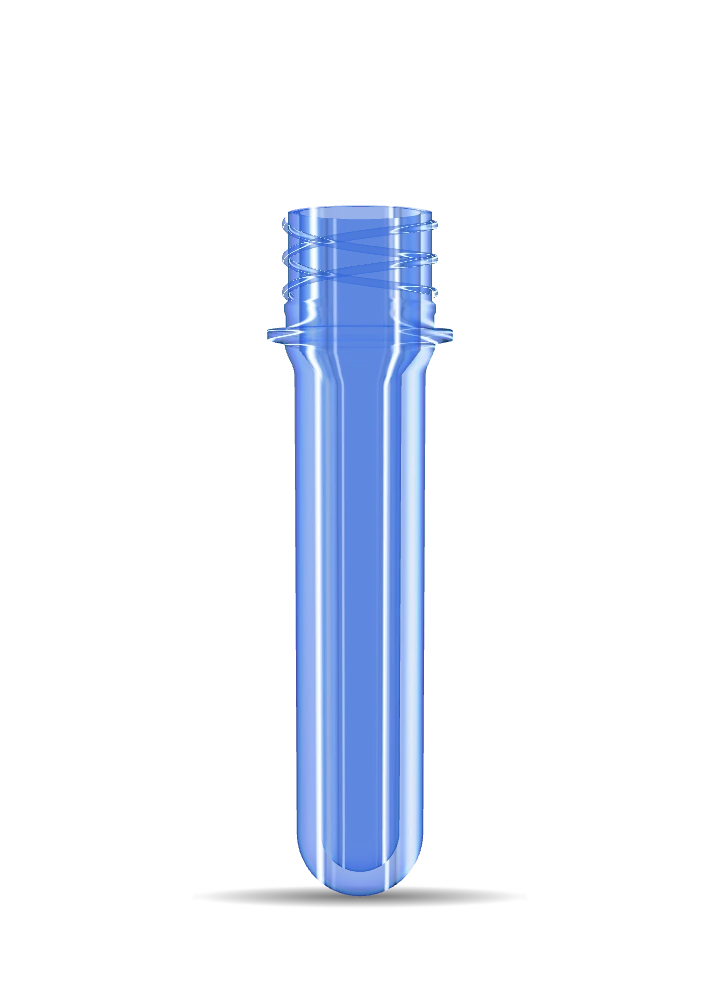
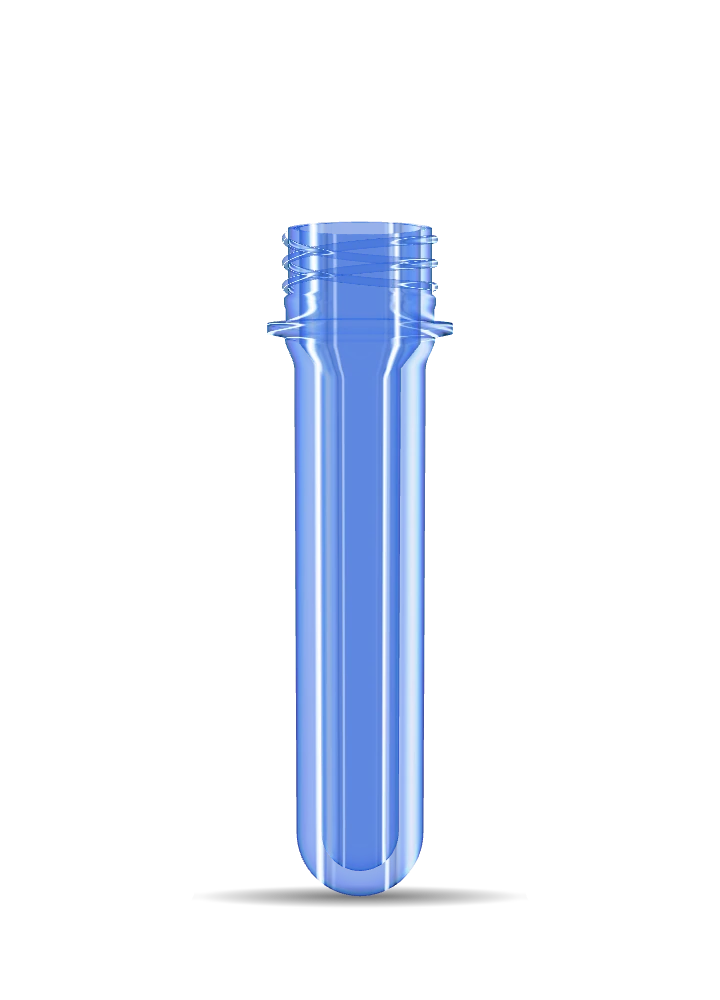
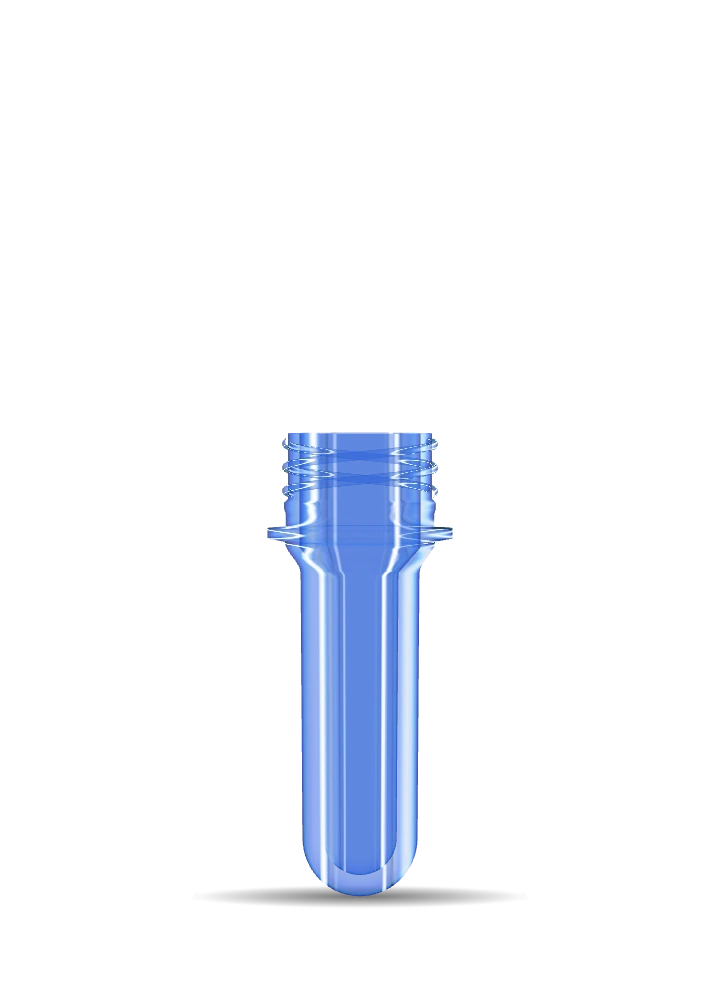
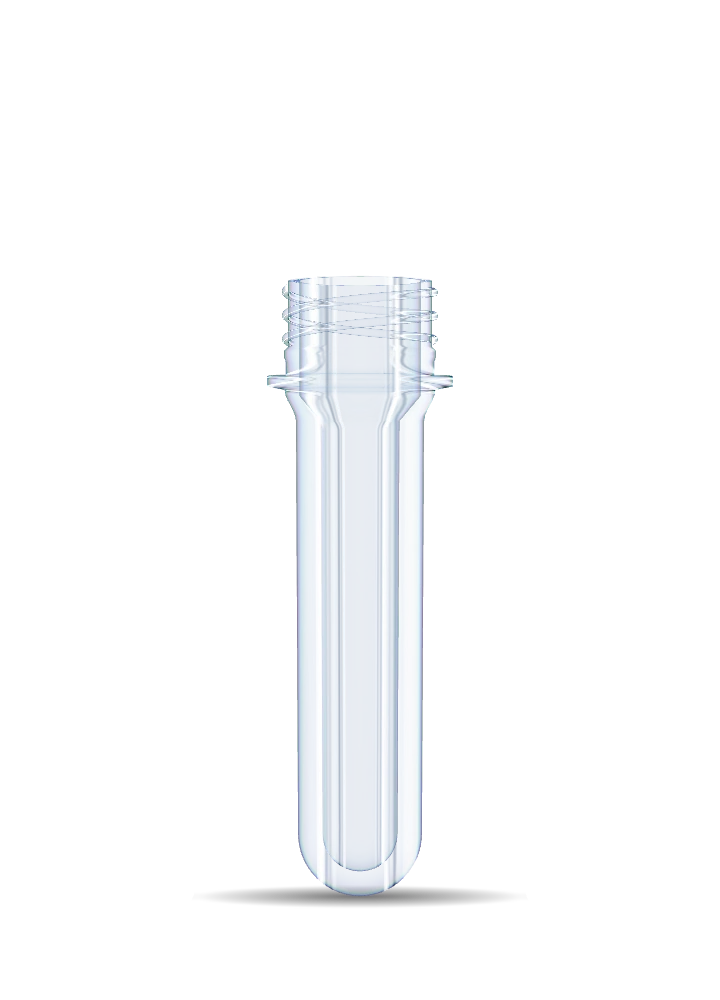
Every item is made from virgin bottle-grade PET, in clear and blue. We ship from our warehouse near Shymkent across Turkestan Region and to other parts of Kazakhstan.
Questions and answers
Is PCO 1881 suitable for carbonated drinks?
Yes, PCO 1881 is widely used for sparkling water and soft drinks. Pick a preform from the upper end of the weight range for your size, for example 24 g for 0.5 L or 40 g for 1.5 L.
Can a PCO 1810 cap go on a PCO 1881 neck?
No. The thread and tamper ring position differ, so the bottle will not seal.
Why do you have only one PCO 1810 item?
39.4 g PCO 1810 is our best seller for 1.5 L bottles. Ask about other weights with this neck and we will source them to order.
How is the 38 mm neck different?
It is a wide neck for 5 L bottles with a 38 mm cap. It is unrelated to PCO 1881 and PCO 1810 and is chosen to match the bottle cap.